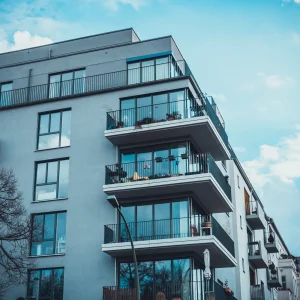
A beautiful high-rise can sound entirely different once the tour ends, so your Luxury Real Estate Houston search should include quiet pauses near windows, shared walls, elevators, amenities, and mechanical equipment before you apply.
Polished finishes, skyline views, and an enthusiastic tour can keep your eyes busy while the building tells a different story. Elevator chimes, a pulsing mechanical hum, garage doors, pool-deck music, or late-night traffic may become obvious only after unpacking — then disturb your sleep, remote work, relaxation, and overall sense of home.
Treat sound as a pattern to investigate, not a quick quiet-or-noisy verdict. Listen through the apartment, shared areas, building systems, and surrounding streets at times that reflect your daily routine.
Give the Apartment One Minute of Silence
Pause the conversation in the bedroom and lounge. Stand near shared walls, doors, vents, and plumbing. Listen for voices, televisions, footsteps, doors, water, pets, HVAC equipment, or a low hum.
Note the source, duration, and repetition. A minute may expose a pattern, but it can’t represent every hour.
Listening Principle
Conversation, music, and visual excitement can mask background sounds that become obvious once you live in the apartment.
Follow the Sound Into the Hallway
Step beyond your door and walk past the elevator bank, trash room, service elevator, parking area, and delivery spaces.
Listen for elevator chimes, closing doors, corridor conversations, trash-chute use, move-ins, and garage traffic. Consider frequency alongside volume: a sound repeated daily may disrupt you more than one brief event.
Listening Principle
The route residents and staff use every day can reveal sounds a staged apartment tour never produces.
Ask What’s Above, Below, and Behind You
Inquire what occupies spaces above, below, and beside the apartment. A fitness center, mechanical room, loading area, pool pump, rooftop equipment, garage gate, or amenity lounge may operate on a different schedule.
Vibration can travel through the structure and feel different from voices or traffic. Don’t assume each nearby space is a residence.
Listening Principle
The room you can’t see may influence the sound inside the room you’re touring.
Let the Windows Prove Their Value
Listen with windows and balcony doors closed, then open them if permitted. Compare freeway traffic, sirens, construction, nightlife, deliveries, and outdoor equipment.
Comparing Luxury Real Estate in Houston may reveal identical floor plans that sound different because of elevation, window exposure, glazing, seals, and proximity to roads, medical corridors, commercial districts, or entertainment venues.
Listening Principle
A skyline view and an effective sound barrier should be evaluated separately.
Return When the Building Changes Tempo
A weekday tour captures one version of the building. Revisit during rush hour, evening, or amenity use. Pool decks, nearby venues, garages, waste collection, construction, and resident traffic follow different schedules.
If another appointment isn’t practical, wait outside the entrance, walk the block, or request a live video tour later.
Listening Principle
Tour timing affects what you hear, so one quiet appointment shouldn’t represent an entire week.
Turn Every Sound Into a Specific Question
Turn what you heard into direct questions. Vague concerns invite vague reassurance.
Ask During the Tour
- What sits above, below, and beside the unit?
- When do pools, lounges, gyms, and service areas operate?
- Does the lease address flooring or quiet hours?
- Are repairs or nearby construction planned?
- How does management handle recurring noise concerns?
Review the lease, addenda, and community rules before applying. Verbal reassurance shouldn’t replace written terms.
Find a Home That Sounds Right to You
Share your schedule, noise sensitivities, preferred neighborhood, floor, view, amenities, parking, and move date. Juvitae Luxury Leasing combines years of market knowledge with personalized searches, high-rise and penthouse expertise, tour and leasing support across the Galleria, River Oaks, Montrose, Downtown, Medical Center, and beyond.
Bring those priorities to our Luxury Real Estate Houston team. Schedule your tour with us at 877 959 9105 to explore high-rises that suit your rhythm.
Meta Title: Listen Before You Lease: Luxury Real Estate in Houston
Meta Description: Touring a high-rise? Discover what to listen for near windows, elevators, amenities, and shared walls. Explore Luxury Real Estate Houston options today.
What Should You Listen for During a High-Rise Tour?
Listen for elevator chimes, shared-wall voices, footsteps overhead, mechanical hums, garage doors, amenity noise, and street traffic that comes through the windows. Pause the conversation in each room, walk the hallway, ask what sits above and below the unit, and return at a different hour so one quiet appointment does not stand in for the whole week.
A beautiful high-rise can sound entirely different once the tour ends, so your Luxury Real Estate Houston search should include quiet pauses near windows, shared walls, elevators, amenities, and mechanical equipment before you apply. Polished finishes, skyline views, and an enthusiastic leasing agent can keep your eyes busy while the building quietly tells a different story about how it will feel to live there.
Elevator chimes, a pulsing mechanical hum, garage doors, pool-deck music, or late-night traffic may become obvious only after you unpack, and then they start to shape your sleep, your workday at home, and the evenings you had planned to spend relaxing. The better approach is to treat sound as a pattern worth investigating rather than a quick quiet-or-noisy verdict, listening through the apartment, the shared spaces, the building systems, and the surrounding streets at times that reflect your real routine.
Give the Apartment One Minute of Silence
The most useful thing you can do on any tour costs nothing and takes sixty seconds. Once the agent has walked you through the kitchen and the closets, ask for a minute of quiet in the bedroom and another in the living area, and then simply stand still and listen to what the apartment sounds like when no one is selling it to you.
During that minute, position yourself where sound is most likely to travel:
- Next to any wall the unit shares with a neighbor or a corridor
- Near the entry door, where hallway voices and elevator traffic tend to leak in
- Beneath or beside HVAC vents and returns, which can carry sound between floors
- Close to bathrooms and kitchens, where plumbing risers run through the building
As you listen, note the source of each sound, how long it lasts, and whether it repeats. A television murmur that comes and goes is different from a low, constant hum that never stops, and the second one is usually harder to live with because your mind never gets a break from it. Houston’s long cooling season matters here too, because an air handler that seems quiet in October may run almost without pause from May through September.
| What You Hear | Likely Source | What to Ask |
| Low, steady hum | Air handler, transformer, or rooftop mechanical equipment | Where is the nearest mechanical room, and when does equipment cycle? |
| Rushing or knocking water | Plumbing riser or trash-chute room nearby | Which walls carry plumbing, and is the trash room adjacent? |
| Muffled voices or TV | Shared wall or corridor wall | What is the wall construction between units? |
| Rhythmic thuds | Footsteps from the unit above or a fitness area | What occupies the space directly overhead? |
| Whistling or rattling | Window seals or balcony door gaps in wind | When were the windows and seals last serviced? |
Keep in mind that a single minute can expose a pattern, but it cannot represent every hour of the day. Use what you hear as a starting point for questions rather than a final judgment on the apartment.
Listening principle: Conversation, music, and visual excitement can mask background sounds that become obvious once you live in the apartment.
Follow the Sound Into the Hallway
Your experience of a high-rise does not end at your front door, because the corridor, the elevator lobby, and the service areas are part of your daily soundscape too. After the unit tour, step outside and walk the route you would actually take each day, from the elevator bank to your door and back down to the garage.
Along that route, pay attention to these common sources:
- Elevator arrival chimes and door cycles, especially if the unit sits beside the elevator bank
- The trash room or trash chute, which can produce a loud drop and clatter at odd hours
- The service elevator, where move-ins, deliveries, and maintenance carts come and go
- Heavy stairwell doors that slam shut on their closers
- Garage gates, ramps, and the echo of tires on painted concrete
Frequency matters as much as volume in a hallway. A sound that repeats forty times a day, like an elevator chime, can disrupt you more than a single loud event that happens once a week. Ask yourself how often you would hear each sound and whether it lands during the hours you most want quiet, such as early mornings or late evenings.
It also helps to look at the floor plan of the whole level rather than just the unit. An apartment at the end of a corridor usually sees less foot traffic than one near the elevators, and a unit that shares no wall with the trash room or the service elevator avoids two of the most common complaints in vertical living.
When comparing homes through a locator, these placement details are often worth more than a small difference in square footage.
Listening principle: The route residents and staff use every day can reveal sounds a staged apartment tour never produces.
Ask What’s Above, Below, and Behind You
Some of the most important sounds in a high-rise come from spaces you never see during a tour. Before you leave, ask the leasing team exactly what occupies the spaces above, below, and beside the apartment, because a fitness center, a pool pump room, a loading area, or an amenity lounge may run on a completely different schedule from your own.
Adjacent spaces that deserve a direct question include:
- Fitness centers, where dropped weights and treadmills can transmit through the slab
- Pool decks and pump equipment, especially on podium levels above the garage
- Rooftop mechanical equipment and cooling towers on top-floor units
- Loading docks and garage entrances on lower floors
- Resident lounges, party rooms, and sky decks used for evening events
Vibration behaves differently from airborne sound. It can travel through concrete and steel and arrive as a low, felt rumble rather than a clear noise, which is why a weight room two floors down may still reach you. Floor assemblies are rated by impact insulation class, a measure of how well they reduce footsteps and other impact sounds, and it is reasonable to ask whether the building has flooring rules or underlayment requirements for units above yours.
Never assume that every space around you is another residence. Two identical floor plans in the same tower can live very differently depending on whether they sit beneath a quiet unit or beneath the sky lounge.
Listening principle: The room you can’t see may influence the sound inside the room you’re touring.
Let the Windows Prove Their Value
Floor-to-ceiling glass is one of the great pleasures of high-rise living, but a sweeping view and an effective sound barrier are two separate things. Listen first with the windows and balcony doors fully closed, and then open them, if permitted, so you can hear how much of the city the glass is actually holding back.
Houston’s outdoor sound sources vary a great deal from one district to the next:
- Freeway traffic along the West Loop near the Galleria and the Southwest Freeway near Greenway Plaza and Upper Kirby
- Medical helicopters and ambulance sirens around the Texas Medical Center
- METRORail bells along the Main Street corridor through Midtown and the Medical Center
- Concerts, game nights, and festivals around Toyota Center and Discovery Green Downtown
- Weekend nightlife along Washington Avenue near Rice Military and along Westheimer in Montrose
Comparing Luxury Real Estate in Houston may reveal identical floor plans that sound different because of elevation, window exposure, glazing, seals, and distance from roads, medical corridors, commercial districts, or entertainment venues. Walls and windows are commonly compared using sound transmission class, a rating of how well a partition blocks airborne sound, so it is fair to ask whether the building used laminated or insulated glass on its street-facing sides.
| Houston Area | Outside Sounds to Listen For | Tour Tip |
| Galleria high-rises | West Loop traffic, retail deliveries | Compare a freeway-facing unit with one facing Post Oak side streets |
| Downtown towers | Event crowds, sirens, ongoing freeway construction | Ask about the event calendar for nearby venues |
| Medical Center residences | Helicopters, sirens, METRORail bells | Listen on the side facing the hospitals versus away from them |
| Rice Military and Washington Avenue | Weekend nightlife, rideshare traffic | Return on a Friday or Saturday evening |
Height changes the picture as well. Upper floors often sit above street noise but can pick up more wind and more of the distant freeway hum that carries across open space, while lower floors hear more of the sidewalk and less of the skyline. Houston’s thunderstorms and gusty fronts are a good test, so if a storm rolls in during your visit, notice how the glass and balcony doors hold up.
Listening principle: Evaluate a skyline view and an effective sound barrier separately.
Return When the Building Changes Tempo
A weekday tour captures just one version of a building, usually the calmest one. Late mornings and early afternoons are when leasing offices schedule most appointments, and they are also when many residents are at work, the pool deck is empty, and the garage is quiet, so the building you meet on tour may be far more peaceful than the building you would live in.
If you are seriously considering a home, try to experience it at the times that matter most to your routine:
- Weekday rush hour, when garages, elevators, and nearby freeways are busiest
- Friday and Saturday evenings, when amenity spaces and nearby nightlife are active
- Early weekday mornings, when trash collection and deliveries often begin
- Sunday afternoons in summer, when pool decks tend to be at their fullest
| Visit Time | What You Are Likely to Hear | Why It Matters |
| Weekday midday | The quietest version of the building | Useful baseline, but not representative |
| Weekday 7 to 9 a.m. | Garage traffic, elevators, deliveries, trash pickup | Tests your morning routine and sleep |
| Weekday 5 to 7 p.m. | Rush-hour traffic, fitness center, returning residents | Tests your evening wind-down |
| Friday or Saturday night | Amenity gatherings, nightlife, rideshare pickups | Tests late-night quiet |
If a second appointment is not practical, you still have options. You can wait outside the entrance for a few minutes, walk the block at night, sit in the lobby, or request a live video tour at a different hour so you can hear the building in motion.
Listening principle: Tour timing affects what you hear, so one quiet appointment shouldn’t represent an entire week.
Turn Every Sound Into a Specific Question
Everything you notice on tour becomes more useful once you turn it into a direct question. Vague concerns tend to invite vague reassurance, so rather than asking whether the building is quiet, ask about the specific source you heard and what management does about it.
Questions worth asking during the tour include:
- What sits above, below, and beside the unit?
- When do the pool, lounges, fitness center, and service areas open and close?
- Does the lease address flooring requirements or quiet hours?
- Are any repairs, renovations, or nearby construction projects planned?
- How does management handle recurring noise concerns between residents?
Pay attention to how the answers are given as well as what they say. A leasing team that can tell you the pool hours, the flooring policy, and the construction schedule without hesitation usually runs a building where those rules are actually enforced, while a team that seems unsure may leave you to solve noise issues on your own.
Before you apply, review the lease, any addenda, and the community rules. Verbal reassurance should never replace written terms, so if a quiet-hours policy or a flooring requirement matters to you, confirm that it appears in the documents you will sign.
Listening principle: A specific question about a specific sound earns a far more useful answer than a general question about noise.
Key Takeaways
- Ask for one minute of silence in the bedroom and living area to hear the apartment without conversation masking it.
- Walk the hallway, elevator bank, trash room, and garage route you would use every day.
- Find out what sits above, below, and beside the unit, including fitness, pool, and mechanical spaces.
- Listen with windows closed and then open to judge how much outside sound the glass holds back.
- Return at rush hour, on a weekend evening, or request a video tour at a busier time.
- Turn each sound into a specific question and confirm important rules in the written lease.
Find a Home That Sounds Right to You
The right high-rise is not only the one with the best view or the finest finishes. It is the one that sounds right for how you live, whether that means silent mornings, a calm home office, or a bedroom far from the elevator bank and the pool deck.
When you begin your search, share the details that shape your comfort:
- Your daily schedule and the hours you most need quiet
- Any noise sensitivities, such as traffic, footsteps, or mechanical hum
- Your preferred neighborhood, floor level, and view
- The amenities you want nearby and the ones you would rather not live beside
- Parking needs and your ideal move date
Juvitae Luxury Leasing pairs Houston market knowledge with personalized searches, high-rise and penthouse expertise, and tour and leasing support across the Galleria, River Oaks, Montrose, Downtown, the Medical Center, and beyond. If a top-floor residence is on your list, our guide to Houston penthouse living covers what to expect at the very top of the tower.
Bring those priorities to our Luxury Real Estate Houston team, where the service is complimentary to you and our bilingual locators can guide the process in English or Spanish. Schedule your tour with us at 877-959-9105 to explore high-rises that suit your rhythm.
Conclusion
A high-rise tour engages your eyes first, but your ears will decide how the home feels once the boxes are unpacked. By pausing in each room, walking the hallway, asking what surrounds the unit, testing the windows, and returning when the building is busy, you give your Luxury Real Estate Houston search the same care you already give to finishes, views, and amenities.
Sound is one of the easiest things to overlook on tour and one of the hardest things to change after you sign. Treat every chime, hum, and passing siren as information, turn it into a clear question, and confirm the answers in writing. That approach helps you compare Luxury Real Estate in Houston with confidence and choose a residence that feels as peaceful as it looks.
Find the high-rise that sounds as good as it looks. Start your complimentary search with Juvitae today.
Tour smarter and lease with confidence. Talk with a Juvitae locator about quiet Houston high-rises.